
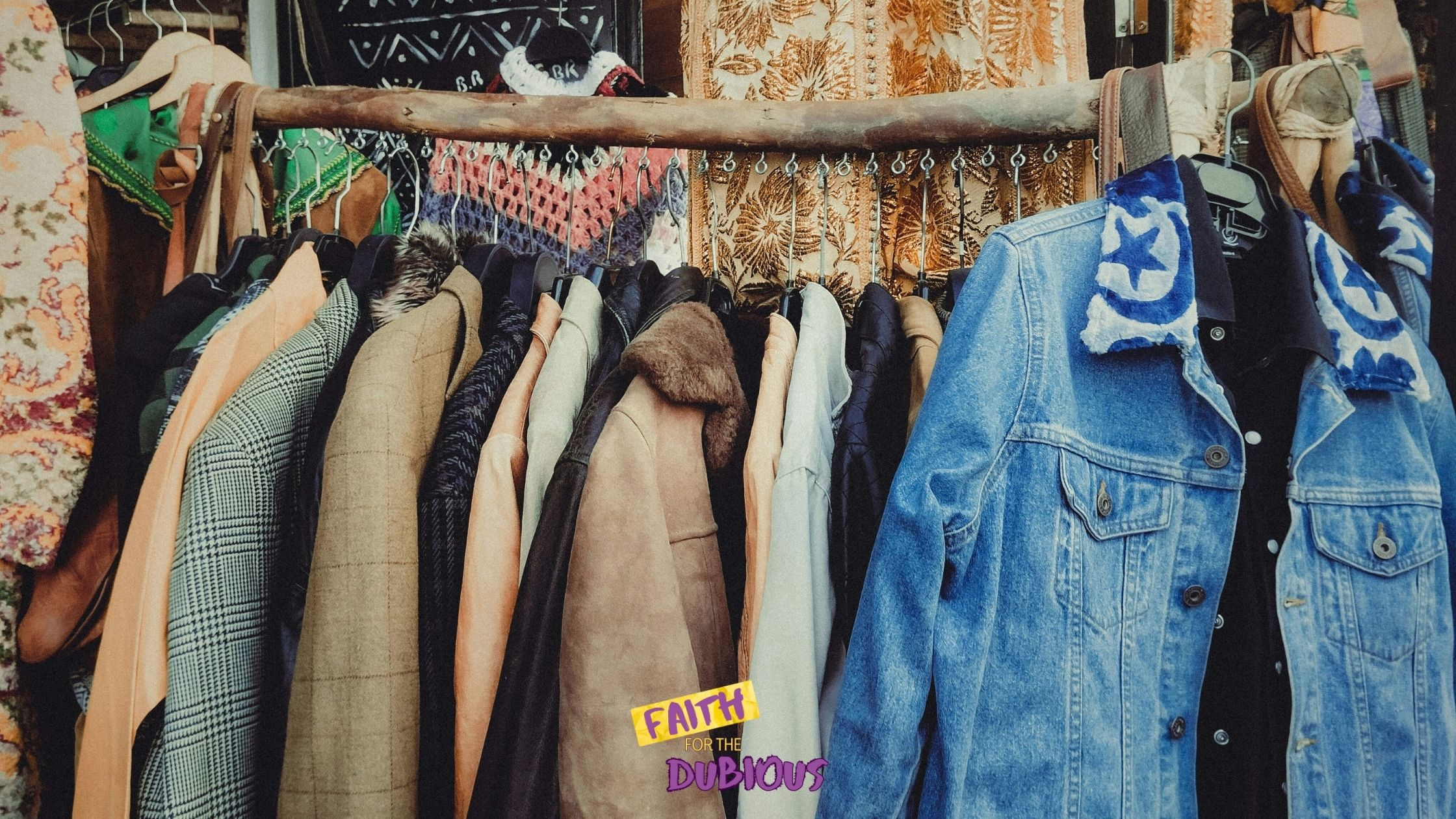
When you’re looking for a fun and easy way to engage your community (and update your wardrobe at the same time!), clothing swap parties are a great place to start. Many of us keep stacking up unwanted clothes from last year’s impulse purchases, gifts that missed the mark, or items that just don’t fit our bodies or our lives anymore.
A clothes swap party is a gathering where people bring clean, wearable items they no longer want, then swap them with others. You go home with “new clothes” (new to you), while your unwanted clothing gets a new home with someone who will actually wear it.
For faith-minded folks who want a hopeful, practical response to overconsumption and too much textile waste, swap parties feel like a small act with real traction. This guide walks you through planning, clear rules, hosting-day flow, and the best way to handle leftover clothing so it doesn’t boomerang back into your life as clutter.
Why clothing swap parties are a fantastic way to refresh your closet
If you’ve ever stood in a store and thought, “I don’t want to buy another thing, but I want something different,” swapping answers that itch without feeding the cycle.
Here are the real, day-to-day benefits of a clothing swap party:
- You save money, because you’re not buying new garments.
- You try different styles with less risk, since you didn’t pay retail.
- You build community, because people show up with their full personality and style, often making it easy to create connections
- You give unwanted items a new owner, instead of letting them sit in a bag by the door for months
It’s important to set expectations up front. Swaps only work when people bring items in good condition. Make sure that people understand that clothes should be in good repair, free from stains, holes (that shouldn’t be there!), and CLEAN. More on this shortly.
Less waste, less impulse buying, and a better shopping experience
Swapping is a great way to interrupt the loop of “bored, buy, regret, repeat.” When you choose clothing swaps in lieu of another shopping trip, you’re slowing the overconsumption that’s so baked into our society, and doing your wallet and the environment a favor.
Think of your closet like a pantry. When it’s packed with excess stuff you won’t eat, you still feel like you have “nothing.” But when you rotate what you actually use, you cook more, waste less, and feel better. A swap does that for clothes.
More connection, and a way to meet new friends
Clothing swap parties work when there is a wide swath of people, from styles, sizes, and preferences. You want enough people with overlap in each of these areas that it’s easy for everyone to have at least a few others to “shop” from.
That said, it means you may want to expand your circle a bit. Ask each person to bring at least a couple of friends who are willing to participate in your clothing swap. This will widen the circle, both for metaphorical shopping as well as making new connections with people.
If you want higher attendance rate and less awkward hovering, make the invite clear and the welcome simple.
A few small moves help a lot:
- Use name tags, even if everyone “sort of” knows each other.
- Say out loud that people should invite friends of all shapes (size variety makes the racks better for everyone).
- Have clear instructions about expectations and how much each person is allowed to take. When people don’t know what to do, they’re less likely to participate.
- Keep the vibe fun, but not chaotic, because chaos makes people leave early.
How to plan a successful swap party from start to finish
Planning a great clothing swap party isn’t complicated, but it does require decisions up front. If you skip that part, the event runs you, and you end up sorting sweaters at 11 p.m. with a forced smile.
Think of it like a potluck. A potluck works when people know what to bring, when to arrive, and where the serving spoons go. A swap party is the same kind of shared table, just with denim and cardigans.
Start with this practical checklist:
- Pick a date and time: Weekends work well, but a weeknight can work if you keep it tight.
- Choose the number of people: 8 to 20 is often the sweet spot for a first event.
- Choose a location: Your own home, a co-working space, local coffee shops with event rooms, or a farmers’ market community room can all work.
- Set a maximum number of items: This prevents one person from arriving with six trash bags.
- Send clothing swap party rules early: People follow rules better when they get them before they’re loading the car.
- Build in enough time: Plan setup time, browsing time, and cleanup time, not just swap time.
Invites matter too. Paperless Post works if your group likes email. A free online event platform can work if everyone uses it, but check the privacy policy and keep it simple. Also, if the tool fusses with uploading & non-users, don’t get stuck, send a group text and move on.
Choose a space with enough room for tables, racks, and a changing area
You don’t need a giant venue, but you do need enough space to move. Picture people holding up coats, stepping back to look, and walking past each other without bumping elbows.
Start by assessing the size of the room and the availability of tables. Then plan a layout that feels obvious.
A solid basic setup includes:
- One drop-off table near the entrance
- Garment racks or a “folded items” table (or both)
- Sorting zones by size or category
- A separate section for accessories, shoes, or seasonal items
Try-ons make or break the day. Set up a changing room if you have one, or create a changing area with a spare bedroom, a curtain, or corner screens. Add at least one full length mirror, and if you can swing it, set out full-length mirrors so people aren’t waiting forever. Privacy matters, and it also keeps the mood relaxed.
Set simple clothing swap party rules people will actually follow
Rules don’t have to feel strict, but they do need to exist. Otherwise, the kindest guests end up doing the most work, and the messiest bags end up in the middle of your living room.
Keep your clothing swap party rules short, friendly, and direct:
- Good condition only: No stains, no rips, no strong odors.
- Clean clothes only: Washed and ready to wear.
- Define type of items: For example, adult clothing, shoes, and accessories, or women’s only, or all genders.
- Label sizes if possible: A piece of masking tape with a size note helps people browse faster.
- Set a maximum number of items: Many hosts pick 10 to 20 items per person.
- Explain fair game timing: Everyone browses first, and then swapping starts at the same time.
Also spell out what happens to leftover clothes. If people know you’ll donate good condition items and recycle poor condition items, they’ll bring better stuff, and they’ll feel less anxious about leaving anything behind.
Pick a swap format that fits your first event
You have two main options, and both can work. Pick what matches your group’s personality.
- Free-for-all (after a set start time): People drop off, browse, then it’s fair game once you announce the start. This is a fun way for close friends, and it keeps the energy light. It can also turn into a feeding frenzy if your group gets competitive, so set the tone.
- Token-based system: Guests get tokens based on how many items they bring, then “pay” tokens to take items. Token-based system swaps can feel more fair in smaller swaps, especially when people worry about one person taking too much.
For a first swap, keep it doable. If your people are easygoing, try free-for-all with clear timing. If your group likes structure, go token-based, but don’t let the math steal your joy.
Hosting Tips for Great Clothing Swap Parties
Hosting doesn’t mean you do everything. It means you guide the flow, so everyone else can relax and have a lot of fun.
Think again about the potluck metaphor. If you don’t label the dishes, everyone asks you what’s in the casserole. If you don’t set plates out, people hover. A swap works the same way. Set the basics in place, then let the room carry itself.
Set up stations so people can browse fast and avoid piles
Piles are the enemy. Piles slow everything down, and they also hide the best stuff until someone gets brave enough to dig.
Instead, set up stations with simple signs. You can sort by size (S, M, L, XL), or by type (tops, bottoms, dresses, outerwear). If your group has wide size range, sorting by type may feel more welcoming, since sizing varies wildly between brands.
At check-in, do a quick quality check for good condition. It doesn’t need to be harsh. Just pull aside anything with obvious stains, damage, or a smell.
If you want to allow “almost fine” items, create a separate section for things that need a small fix, like a missing button. However, if you don’t want that extra complexity, direct those items to donation (if wearable) or recycling (if poor condition).
Make try-ons easy with mirrors, a changing room, and simple flow
Try-ons can get awkward fast, so plan for it like you’re hosting a small pop-up shop.
Make the changing area clear, and add a chair or small table for personal items. Put a full length mirror right outside the changing room so people can step out, check fit, and move on. If you have full-length mirrors, spread them out so there isn’t a single bottleneck.
To reduce mix-ups, encourage guests to:
- Bring a tote bag for their picks
- Wear easy layers, like leggings and a tank
- Keep shoes and accessories together in one spot
A simple line system helps too. People don’t need a clipboard signup sheet, they just need clarity.
Keep it welcoming and organized with clear timing and a few roles
A swap runs smoother when you name the moments out loud. People relax when they know what’s happening next.
Assign 2 to 3 helpers if you can:
- Greeter: Welcomes guests, points to drop-off, offers name tags.
- Sorter: Guides where items go, keeps stations from turning into piles.
- Runner: Refills racks, puts empty hangers away, answers quick questions.
Here’s a simple timeline that works in an own home setting and in borrowed spaces:
- Arrival and drop-off (15 to 20 minutes)
- Sorting window (10 minutes, everyone helps)
- Swap start announcement (then it’s fair game)
- Final call (10 minutes before end)
- Cleanup and leftover clothing plan (15 to 30 minutes)
Leave walking paths open, and keep snacks off the clothing tables (crumbs happen fast). Then take a breath. You’re hosting people, not running a store. Good luck, and don’t overthink it.
What to do with Leftover Clothes After Clothing Swap Parties
Leftover clothes are normal. Plan for them before anyone arrives, and you won’t end the day staring at three sad bags of “deal with later.”
The best way to handle leftovers depends on condition. Sort into two clear groups, good condition and poor condition, then move each group out quickly.
A simple rule helps: if you wouldn’t give it to a friend, don’t donate it.
Donate good-condition items to local groups that can use them right away
Donation works best when it’s targeted. Random drop-offs can become someone else’s unpaid sorting job, and that doesn’t match the kind of neighbor love we talk about on Sundays.
Learn More: 17 Church Outreach Ideas for 2026 and Beyond
Consider donation options like:
- Shelters
- Refugee resettlement partners
- School closets
- Mutual aid groups
- Church clothing closets
- Community pantries
Call ahead and ask what type of items they accept, then pack by category (coats in one bag, jeans in another). When you donate this way, leftover clothes find a new owner faster, and they reach a new home without extra friction.
Recycle or repair poor-condition items instead of donating them
Donating poor condition items creates extra work for already stretched teams, and it also shifts the problem downstream. So be honest. Sort with clear eyes, not wishful thinking.
Good options include:
- Textile recycling drop-offs (if your area has them)
- Brand take-back bins (if available)
- Cutting items into rags for cleaning
- Local artisans who use donated fabric to make things like rag rugs
- A small mend-and-wear pile, only if you know you’ll actually sew the button back on this week
If something is torn, stained, or worn out, recycling or rags beat donation every time.
Clothing Swap Parties as an Answer
Clothing swap parties are a fantastic way to get new items without buying more, and they also turn unwanted items into shared abundance instead of closet clutter. When you set clear rules, plan a changing area, and decide what happens to leftover clothing ahead of time, your first time hosting can feel simple, not stressful.
If you’ve been waiting for the “perfect way” to reduce excess stuff while still enjoying style, this is a good idea you can act on this month. Pick a date, invite friends of all shapes, choose a swap format, and host your own swap party. Then watch how clothing swap parties turn a pile of unwanted clothes into a positive experience for real people.