
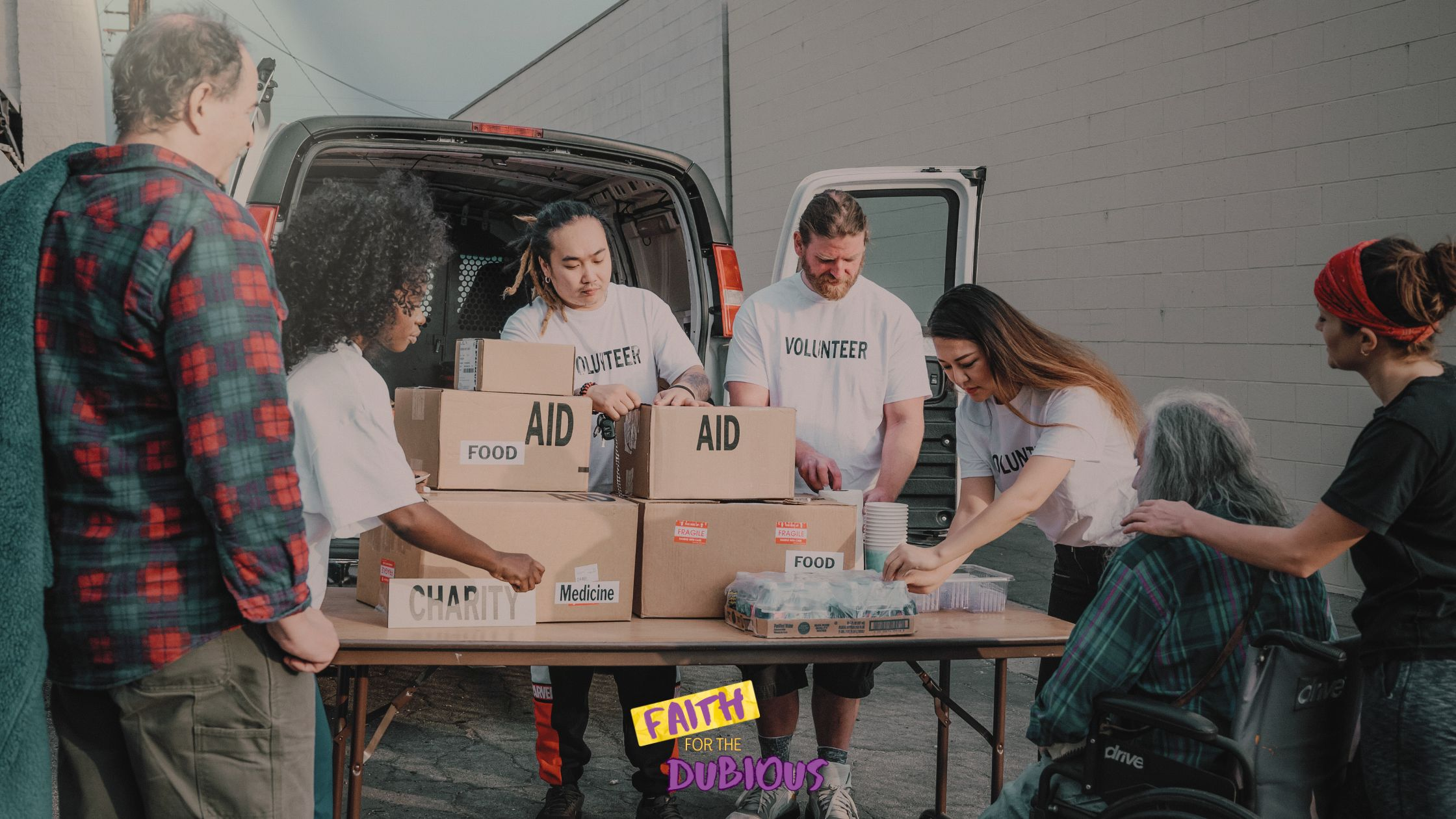
At a time when the cost of food keeps going up, but income, well, does not, you may be inspired to become a food drive volunteer (or want to recruit some for your next event!)
One thing that’s been encouraging the past few months, as we’ve seen food assistance delayed or cut, job losses, and other obstacles making it harder and harder to get food on the table, is the mobilization of volunteers helping to make sure their neighbors don’t go hungry. One of the biggest ways this has been happening is through local food drives.
Whether you’re curious about what it’s like to be a food drive volunteer or how to work best with volunteers for your next event, this guide can help clear up some questions so you can hit the ground running on this important work.
This guide will help if you are brand new to serving or if you host drives and want to welcome incredible volunteers. We will cover how food drives work, what to expect in different volunteer opportunities, and how to create a safe, joyful space for everyone who walks through the door.
Understanding Food Insecurity and How Food Drives Help
It’s hard enough to come up with what’s for dinner every night. Now imagine doing so with a sparse or even empty pantry. For too many, there’s a daily stress of asking, “Will we have enough?” or “Will we have anything fresh or healthy?”
For people of faith, answering this question connects us to the call to justice, the shared table of communion, and Jesus feeding crowds with simple loaves and fish. You are not called to fix everything. You are asked to love your neighbor. And there’s no better way to do that than to ensure they stay fed.
What Food Insecurity Looks Like in Your Area
Food insecurity means someone does not know if they will have enough food, or enough healthy food, for everyone in their home. It often hides in plain sight.
In many areas, the people most affected include:
- Children in single-parent homes
- Elders on fixed incomes
- Working families with low wages
- College and trade school students
Last year, many regional food banks reported moving hundreds of thousands, and sometimes millions, of pounds of food across their service region. That food was distributed through food pantries, mobile pantries, and community partners to reach families who might not be able to stand in a public line for help.
Hunger is often hidden, even in church communities. A choir member might skip meals so a child can eat. A deacon might covertly visit a food pantry between meetings. When you take part in a food ministry, and do it with love and dignity for the recipients, you’re touching more lives than you can possibly know.

How Food Drives, Food Pantries, and Mobile Pantries Work Together
Think of the web of services addressing hunger as a long table that many hands help to set.
Food donations come from food drives at churches and workplaces, grocery store partners, Amazon wishlist items, farmers, and other community partners. That food often goes to a regional food bank or non-profit organization, then out again to:
- Food pantries, which are local sites (often in churches or community centers), where guests choose groceries
- Mobile pantries, which are set up in parking lots and bring food closer to people who lack transport
- Special programs, like school snack programs or senior food boxes
Many regions now use a food map on their website so neighbors can search for nearby pantries, mobile pantries, and additional help resources. A clear food map can be life-changing for someone who does not know where to turn.
The driving force behind this entire operation: You. The food drive volunteer who helps power the system. You might sort cans, pack food boxes, guide cars in parking lots, or welcome guests. Every part of this process is essential to getting food into the hands of people who need it.
Why Church Members Are Stepping Up as Food Drive Volunteers
The gospel asks us to hold values like:
- Welcoming all people, no matter their story
- Caring for creation, which includes reducing food waste
- Seeking justice for neighbors on the margins
Food drives connect to all three. When you volunteer, you help rescue good food from going to landfills. It’s then shared with people who need it most. And ultimately, you show that you stand on the side of those who are hungry, not as a savior, but as neighbors.
No matter your skill level or income, you can offer a gift of time. That gift is just as essential to the work of the church as a check in the offering plate.
Types of Food Drive Volunteer Opportunities and What to Expect
Food drives need all kinds of people. Some love lifting boxes. Others love greeting guests by name. Every volunteer opportunity helps move food to real plates and supports nutritious meals.
Food Drive Volunteer Opportunities Behind the Scenes: Sorting, Packing, and Moving Food
Behind the scenes, you help set the table before anyone arrives. Common tasks include:
- Sort canned goods by type
- Check dates and quality
- Pack food into sturdy food boxes
- Move pounds of food from pallets to shelves
You might serve at a food bank warehouse, a church basement, or in parking lots during mobile pantries. Tasks change from site to site, so most places offer several volunteer shifts across the week.
Wear closed-toed shoes and comfortable clothing that can get dusty. You may stand for long stretches and lift moderate weight. Many food bank volunteers like to bring work gloves as well.
You do not have to be super strong. There are lighter tasks too, like sorting small items or rebuilding boxes. The key is to show up and be ready to work with care.
Front Line Food Drive Volunteer Opportunities: Intake and Food Distribution Teams
If you enjoy meeting new people, front-line roles might fit you well.
Intake volunteers help guests check in. They:
- Greet people with warmth
- Help with forms
- Guide them through the pick-up process for their food
- Share information on additional help resources
Food distribution teams hand out food boxes or help guests choose items. They may:
- Place food into carts or bags
- Help carry items to cars
- Answer basic questions about hours or future dates
Privacy, dignity, and respect are essential. Many guests feel shame about asking for food assistance. Volunteer leaders should always guard personal information and not discuss guest details outside the team.
Special Events, Group Reservations, and Corporate Groups
Many food drives are tied to special events or turned into community events. Others are part of a growing network of schools, churches, and neighborhood groups that collect food several times a year.
If you’re interested in turning your food drive volunteer work into a group outing, you might sign up as a group of volunteers, such as:
- Youth groups or small groups
- Families serving with a child or older family member
- Corporate groups from a local business
Most sites have a simple contact form or email on a web page for group reservations. It’s important to use this before showing up unexpectedly. That helps the volunteer manager or volunteer coordinator plan tasks, schedule enough staff, and make sure there is safe space for everyone.
Age Requirements, Background Checks, and Volunteer Safety
Many sites welcome volunteers of many ages, but they often have clear age requirements. For example, teens might serve with an adult, while younger children help only at certain special events.
Being a food drive volunteer can be a great way for teens to earn community service hours for school while learning about service and generosity. If teens need a form signed, ask in advance so staff can plan for it.
Some ongoing support roles, such as intake volunteers or those who handle personal data, may require a background check. This protects both guests and volunteers. Staff will explain how that works and what the site’s policy covers.
Basic safety guidelines usually include:
- Wear closed-toed shoes and comfortable clothing
- No open drinks in food areas
- Lift with your legs, not your back
- Follow directions from the volunteer manager or staff lead
Safety is part of hospitality. When volunteers stay safe, they can keep serving for a long time.
How to Get Started as a Food Drive Volunteer in Your Community
You might feel ready but unsure where to begin. Start simple and local.
Finding Local Food Drives, Food Pantries, and Volunteer Opportunities
To find a nearby volunteer opportunity, try these steps:
- Search online for “food drive volunteer” or “food bank volunteers” with your city name
- Ask in community Facebook groups about upcoming events or ongoing organizations that may need help
- Check your church’s web page for current food drive or food pantry details
- Visit local non-profit organization and regional food bank sites
- Look for a food map that lists nearby pantries and mobile pantries
When you find a good match, reach out through a contact form, email, or phone. Ask if they accept walk-in volunteers or if you should sign up for regular volunteer opportunities in advance.
What to Ask the Volunteer Coordinator or Volunteer Manager
Staff who lead volunteers usually carry a lot. Respect their time by asking clear, simple questions such as:
- What are your main volunteer shifts and days?
- Are there age requirements if I bring a youth group or family member?
- Which roles are open now, such as intake volunteers or food distribution helpers?
- Do you have a privacy policy or short orientation I should read first?
- What should I wear and bring with me?
- Can you sign off on community service hours if needed?
Write these questions down before you call or email. It shows you honor their work and want to serve well.
Preparing Your Heart, Hands, and Schedule for Service
For many Christians, this service is part of spiritual life. You might:
- Pray, journal, or reflect before you serve
- Plan transport and time so you are not rushed
- Bring a labeled water bottle
- Arrive a little early to check in
Come ready to meet new people, listen more than you talk, and respect different cultures and backgrounds. Protect guest privacy as if it were your own.
If you serve with a small group or family member, this can be rich quality time. You share work, stories, and maybe a snack after. Many people say serving together helped their faith feel more real.
Tips for Food Drive Hosts: Welcoming and Supporting Incredible Volunteers
If you lead a church or non-profit organization, you help shape the food drive volunteer experience. Clear systems and warm hospitality make it easier for incredible volunteers to serve again and again. Here are practical tips for food drive volunteers and hosts who guide them.
Designing Clear Roles and Simple Systems for Volunteers
Volunteers do better when they know what to expect. Create short, written role descriptions for tasks like:
- Pack food and sort donations
- Intake volunteers and guest check-in
- Set up and clean up
- Traffic guides in parking lots
- Resource table helpers
Use sign-up forms that list volunteer shifts, age requirements, and physical expectations. Note if a role includes lifting, standing, or direct guest contact.
A simple, well-organized system helps food distribution move smoothly and helps volunteers feel that their time matters.
Training Volunteers on Dignity, Privacy, and Hospitality
Before each event, offer a brief training. It does not have to be long to be deep. Cover:
- How to greet guests with kindness and without pity
- How to protect privacy and follow your church or non-profit organization’s privacy policy
- Basic trauma-informed ideas, such as avoiding probing questions about income or immigration status
Tie this to Christian values: welcoming the stranger, guarding each person’s story, and seeing the image of God in every guest. When volunteers understand the “why,” they serve with more care.
Making the Volunteer Experience Joyful, Safe, and Sustainable
A strong food drive volunteer experience feels both purposeful and kind. One of my favorite things about having taken on a monthly food distribution at my church is the fun we have together, working toward a shared cause. For our distribution, we have two churches and several community members who work together. This shared cause brings joy to all of us and helps build bonds we may not otherwise have. To foster this type of environment, hosts can:
- Provide name tags so people remember each other
- Offer water and simple snacks, if allowed in your setting
- Give quick stretch breaks during long volunteer shifts
- Rotate heavier tasks with lighter ones
- Pair new people with experienced food bank volunteers
Celebrate what has been accomplished through their work. Share totals like pounds of food packed last year or the number of households served. Thank volunteers in church services, emails, and special events.
Support ongoing support for volunteers through small group reflection, prayer times, or story sharing, always with guest consent. This keeps intentions grounded and reduces burnout.
Creative Ways to Engage Your Church, Schools, and Community Partners
You do not have to host a food drive alone. And honestly, you shouldn’t. Get creative with partners:
- Invite schools to collect food or host drives
- Set up an Amazon wishlist with your most needed food donations
- Partner with other churches or community partners for joint drives in shared parking lots
- Invite corporate groups and small businesses to sponsor food boxes or match giving
Keep a simple, updated web page with a clear contact form for group reservations, current needs, and upcoming volunteer opportunities. When it is easy to sign up, more people will lend their hands.
Conclusion
A single food drive volunteer cannot do it all alone, but they can make a big difference. Each of us, coming together with our unique skills, adds something to the experience. And each time we pack and hand out a box of food, we’re making a direct impact in the community in which we live and serve.
If you feel even a small nudge, take one step this week. Sign up for a shift, email a volunteer coordinator, or share a local volunteer opportunity during church announcements.
As you bring your gift of time and your unique talents, God multiplies them. Together, one food box at a time, we can build a more just and loving community where every neighbor is fed, and no one is forgotten.